
How to Biohack Smart and Safe
Applied Neuroscience Strategist, K-Selected Biohacker, Tantric husband, Promethean peaceful parent, Adventuring philosopher, Raconteur, and Author. He spent +14 years researching the intersection of human performance enhancement and advanced personal growth in his obsessive quest to find real-life "NZT-48."
Doctors begin their careers with the Hippocratic Oath vowing to...
First, do no harm.
While I'm not a doctor, the same ethos has underlied my endeavors to inform about Smart Drugs, Nootropics, health supplements, and Biohacking tech for 14 years now. I'm a major advocate of the safe and conservative use of these tools, so in this article, I'll outline my guidelines for safety and risk management strategy. If you're new(-ish) to this whole weird and wacky world of Biohacking, self-experimentation, and cognitive enhancement, this is a pretty good place to start.
Among Biohackers, there's a predilection for risk.

And don't get me wrong, like risk. My favorite line from my all-time favorite novel is...
I was young again, as if on the sea or in the air, made lively by having everything to lose and everything to gain, made content only by risk, for in the light of risk every earthly color catches heavenly fire.
But I like risk that ROIs - terms of profit, pleasure, or health - I don't like risk bearing drastic downside (wherein dwell dire black swans - yeah, I'm an acolyte of Nassim Taleb, author of Antifragile). Due to my conspicuous position as a self-experimenter and the personality I inject into my content, I receive a number of emails and messages from people (usually young men) asking me about experimental Smart Drugs, research chemicals, microdosing psychedelics, or psychoactive chemicals in the legal fringes. I consistently urge conservative self-experimentation to these people, not because I'm a stodgy conservative but because this kind of self-experimentation is bad risk management in light of my 14 years of obsessive study. Whatever your Biohacking goals are...
- Being more energetic, focused, and productive
- Improving mood and mindset
- Improving memory or accelerating skillset acquisition
- Recovery from trauma
- Having better sex
- Recapturing your cognitive edge
- Making gains in the gym
...There are better ways of doing it than taking risks with unproven research chemicals, taking supplements in extreme dosages, or invasive technological interventions.
How to do proper research (before you order or ingest anything)

First, don't assume that anything is safe just because it's for sale. Online and even in your local pharmacy, you can find plenty of supplements for sale in enticing packaging, which you should not be taking.
Before you order or ingest anything, I'd urge you to do at least an hour of actual research on it.
- Go on YouTube (or the podcast directory of your choice) and look up all the episodes that other people have made about their experiences with the supplement, substance, or medicine in question. Create a playlist and let it roll.
- Browse online forums (such as Longecity and Reddit) and read what people are saying about their experiences. If you encounter a few reports of undesirable side effects, such as a headache or trouble sleeping, that's not necessarily a deal-breaker. However, if there are a significant number of reports of adverse effects, that's a strong reason not to use it. Testimonials and anecdotes can be misleading, and, of course, the placebo effect will skew (somewhat) the reported results. So, importantly, you want to look at what the actual science is saying...
- Search for papers and studies on the supplement or medicine on PubMed: https://www.ncbi.nlm.nih.gov/pubmed/advanced. For some supplements, you’ll find hundreds of studies and papers; look for more recent, placebo-controlled human studies and review the researchers' conclusions in the study abstracts. If there are very few published studies on a supplement and it’s unclear what benefit they have in human trials, that’s a red flag.
- On LimitlessMindset.com, you'll find a database of over 100 popular Nootropics and anti-aging agents. In plain English, I assign a risk grade from A+ to F. You may also want to check out the excellent objective research hub Examine.com, which has many meticulous articles describing in-depth the potential downsides of various supplements.
IF there's consistency between the positive effects being reported in the anecdotes and the findings of the studies and papers, and if there's a lack of red flags or serious downsides discussed, then go ahead with experimenting with the supplement.
2026 Update: Of course, you're also wondering: What about AI? ChatGPT or other AI platforms are supposed to be pretty good at fact-checking things like which supplements are safe, right? We'll address that next.
Get your medical advice from, not the internet (nor AI), but "the doctor of the future"
The bland piece of advice you're bored of hearing is: Ask your doctor, physician, or a trusted health practitioner before making any health decisions. Ideally, we'd get our doctor's blessing on every new supplement or Biohacking thing we tried. But there are a couple of obvious and not-so-obvious issues with this: if your doctor lacks expertise in the supplement you're considering, their opinion is not much more sophisticated than yours. Doctors can often be misinformed; some doctors are cynically skeptical and categorically anti-supplements or anti-anything-natural-health. Doctors can be one of the greatest sources of medical misinformation, as one of the top pain doctors in the United States explained to me; many doctors have been corrupted by perverse incentives and recommend harmful pharmaceutical drugs. Finally, do you and your doctor have the time to talk every time you want to try a new supplement?
Because doctors aren't omniscient and, in fact, very human, you should really complete research steps 1-4 with any drug or medicine that your doctor recommends as well. If you're making a serious health decision, you should ideally get a second or third opinion from another health professional. It may sound like a lot of work, but true health requires doing your own research and critical thinking!
Is the internet a replacement for a doctor? I don't think so. The internet is rife with medical misinformation. There are unending examples of people trying to self-diagnose on the internet with disastrous results. If you wouldn't replace real-life friends, family, or a romantic life partner with the internet, why would you replace your doctor?
Is AI a replacement for a doctor? I'm not anti-AI, I think it can be an awesome tool in the hands of the rigorous impericist, but it's not a replacement for a doctor. And ChatGPT agrees, writing...
AI is not a replacement for a doctor because medicine is not merely pattern recognition or information retrieval; it is a context-rich, ethically grounded, responsibility-bearing practice. A physician integrates incomplete data, physical examination, longitudinal patient history, intuition honed by lived experience, and moral accountability. AI has none of these. It cannot examine a patient, detect subtle affective cues, weigh competing risks under uncertainty, or bear responsibility when harm occurs. Most importantly, AI systems are optimized to generate plausible-sounding answers, not to ensure truth, safety, or patient-specific appropriateness. In healthcare, confident wrong answers are not just errors; they are dangerous. Until an AI can assume legal liability, moral responsibility, and embodied clinical judgment, it remains an assistive tool, not a healer.
Also, AI hallucinates. Here are some well-known examples of AI giving bad or dangerous health advice...
- Several users reported ChatGPT advising them to discontinue antidepressants or other prescription drugs abruptly, which is medically dangerous.
- Researchers found that AI chatbots frequently provided confident but incorrect oncology guidance, including wrong drug regimens and staging information.
- AI systems were shown to provide calorie-restriction advice and tips that could exacerbate eating disorders when prompted in certain ways.
- In multiple viral Reddit and Twitter threads, users reported AI tools dismissing symptoms that later turned out to be serious conditions, such as appendicitis or cardiac events.
- Doctors testing AI tools found they frequently fabricated clinical studies, guidelines, or authoritative sources when asked for medical justification.
The doctor of the future?

Albert Schweitzer, German doctor, theologian, organist, musicologist, and philosopher, wrote...
"The doctor of the future will be oneself."
A "doctor of oneself" is, of course, a Biohacker practicing rigorous empiricism. Someone who doesn't outsource responsibility for their health to doctors, AI algorithms, or the internet. When making serious health decisions - Should I go on testosterone replacement therapy? Should I go on the carnivore diet? Should I get the flu vaccine? Should I get that "benign" cancer tumor removed? - they avail themselves of...

| Expertise | Science | Anecdotal Evidence | Personal Experience & Data |
|
|
|
|
The doctor of the future is voracious for knowledge from a variety of sources, filtered through critical thinking and skepticism. Then they offer up a potent prayer (requesting wisdom and futurecasting gratitude), get a good night of sleep, and go with their gut instinct.
Safe Nootropics

Not all Nootropics are created equally safe. I advise starting with the safer ones and then, only if you're disappointed, moving on to the riskier options.
The Adaptogens
Are what I recommend first to my family and close friends when they ask me about something to give them extra energy, stronger immunity, better sleep, or help with stress. They've been the subject of hundreds of high-quality human studies done around the world and have, over thousands of years, earned a prestigious position in Eastern medicinal traditions. A few of them are well worth your attention…
Rhodiola Rosea is (probably) the best Adaptogenic Nootropic for energy and mood.

Eleuthero is the fatigue-overcoming and immune system booster that keeps me healthy during the winter months.

Red Reishi is the stress-relieving anxiolytic I reach for when I want to relax after a long day or get some restorative sleep (I used to recommend Ashwagandha, but then learned it has some downsides). You want to be very selective about the Ashwagandha you take. Many Indian-sourced supplements are rife with heavy metals, and the KSM-66 form is particularly toxic. I discussed this with my friend and obsessive researcher, Lucas Auon.)

Horny Goat Weed is my go-to for optimizing sexual hedonism, male performance enhancement, and as a testosterone hack for masculine energy to take on life.

Panax Ginseng and Ginkgo Biloba are two long-term memory and general cognitive health herbal supplements that everyone over the age of several decades should consider taking.


The Racetams
They are a class of synthetic chemicals that have become synonymous with Smart Drugs, but a conservative biohacker would NOT want to use all of them. Some of the newer Racetam derivatives I'm suspicious of, but a few of them are well-established as very safe...
Piracetam, the original smart drug, has been the subject of hundreds of human trials, including long-term population studies.

Oxiracetam I call the discipline molecule and you should try it to find out why! For those who are averse to stimulants, Oxiracetam provides a very subtle focus-imbuing effect.

Aniracetam has an anxiolytic effect, which many find lends them some much-needed clarity.

Phenylpiracetam is an upgraded version of Piracetam, which many biohackers love because it's a hardcore focus promoter for logical, cognition-demanding tasks.

Numerous human studies have found that (even higher dosages) of Piracetam and many of the related Nootropics are remarkably safe and side effect free, BUT based upon anecdotal evidence, they are a less conservative performance enhancement option than the Adaptogens.
Dosage

Every couple of years, we'll hear about someone (usually a reckless young man) who dies of an overdose involving supplements or ostensible Nootropics. Almost always, excessive dosage is to blame.
A sapient biohacker is keenly aware of human biodiversity and the significant variability of responses that different people have to different dosages. A dose that is mind-blowing for one person may be utterly underwhelming for someone else.
- So start with a conservative dosage. There's no good reason to start any supplement at a high or extreme dosage. Large attack dosages are a myth; if anything, they'll just build up a tolerance to the Nootropic, so that you need more of it in the future to experience any benefit, which is not very economical.
- Some Nootropics require time to accumulate and work on your neurobiology. You may need to take them for days, weeks, or even months for their beneficial effects to become apparent.
- You may try a Nootropic at a moderate dose and experience an initial desirable effect, but subsequent doses may be underwhelming. This does NOT mean that you should drastically increase the dose. Usually, this means the initial dose exhausted a particular neurotransmitter or neurobiological mechanism. The smart move at this point is to identify the cofactors the Nootropic requires and try it again at the initial dosage with those cofactors. Or your diet may be lacking the nutrients your body needs to properly process the Nootropic. Often non-response is just a sign that this Nootropic is not for you - try something else.
What dosage should you be taking?
The best place to find this information is the human studies on PubMed; the abstracts will almost always mention the dosages used, but sometimes in confusing scientific jargon.
You can find credible and clearly understandable dosage recommendations in the Nootropic Ingredients section of LimitlessMindset.com or on Examine.com.
You can't always trust dosage recommendations on the products' packaging or the manufacturer's website. Sometimes they'll recommend unnecessarily high dosages, so always double-check the dosage.
Stacks and Stacking

Upon venturing into the Biohackingsphere, you'll be barraged with promotional content for branded Nootropic stack products and may be further confused by the discussion of stacking.
Stacking just means combining different Nootropics, Smart Drugs, or supplements
The most risk-averse approach is to take a single ingredient Nootropic alone and see how it affects you. Once you find something that consistently helps, try adding another Nootropic alongside it and see if the cumulative effect is worthwhile. You can repeat this process, adding as many different ingredients to your personal stack as you would like.
However, the more you add, the greater the risk of an adverse reaction and the less conservative this self-experimentation becomes.
Nearly any stack that you can think of has been tried thoroughly by people on Internet forums, so you can get a good idea of which stacks produce the best effect by reading others' experiences.
However, few stacks have been studied in clinical environments by trained scientists, so you're taking a bit of a chance.
Nootropic stack products are a mixed bag...
Some are great, but many are a waste of time and money. For the reasons I describe in the vlog below, many stacks are problematic; they aren't the most conservative Biohacking option...
In my content over the years, I've done some naming and shaming, calling out crappy products publicly. But I'm a little older and wiser now, and unethical actors in the space can make a lot of money selling junk products to naive customers (especially with a combination of Facebook/Meta ads and fake Amazon reviews); enough money to use lawfare to silence critics. Legal anti-SLAP defamation protection of truth-tellers practicing free speech on the internet is not great (as demonstrated in recent high-profile cases like CoffeeZilla vs Jake Paul). So, instead of naming and shaming, or recommending any particular branded stack products, I'll give you a methodology for evaluating them on a one-off basis...
- Do they display certificates of analysis verifying the ingredients?
- Are they transparent about the specific Nootropic ingredients in it? Or does the label contain vague language about "proprietary blends?"
- Does it contain red flag ingredients? DMAE, Huperzine, Caffeine, Choline Bitartrate, Magnesium Oxide, Vinpocetine, and/or Cyanocobalamin
- Are their customer testimonials substantial and legitimate?
- Are there real people standing behind the product (which you can find on their "About Us" page), or is it just a faceless eCommerce operation?
- Do they have a customer service operation? A phone number? A legitimate address?
- Do they pay their affiliates a high percentage (over 30%) of the product cost?
Be wary of the "Kitchen Sink" Proprietary Blend.
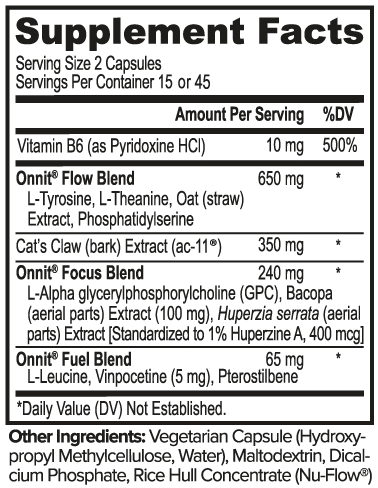
This is the single biggest red flag. If a label says "Focus Matrix (1,500mg)" followed by a list of 20 ingredients, it is a "shoddy" product. Companies use a proprietary blend to hide the fact that the expensive, effective ingredients (like Citicoline or Lion’s Mane) are present in "fairy dust" amounts (1–5mg), while the blend is 95% cheap filler like Caffeine or L-Tyrosine. You are often paying $60+ for what is essentially a $5 caffeine pill.
Here's how a shoddy stack would compare to a solid one (taken by a savvy Biohackers)...
| Red Flag | The "Shoddy" Version | The "Safe & Smart" Version |
| Choline | Choline Bitartrate | Alpha-GPC or Citicoline |
| Magnesium | Magnesium Oxide | Magnesium L-Threonate |
| Labeling | Proprietary Blends | Open-Label (Exact mg listed) |
| Certification | "Made in the USA" only | Third-Party Tested (NSF, USP, Informed Sport) |
| B-Vitamins | Cyanocobalamin (B12) | Methylcobalamin (B12) |
Risk Factor: Purity

Another perpetual concern with Nootropics is purity. If you don't see a certificate of analysis from an accredited North American or European lab for a product with spectroscopy showing greater than 97% purity, that's a red flag. Bacopa, for example, is a pretty good long-term Nootropic for memory, BUT there's a concern with metal toxicity with the herb - apparently, many batches of Bacopa have been badly contaminated with toxic metals.

Antifragility - My Risk Philosophy
 Some Biohackers are VERY risk-averse, like Justin, whom I interviewed; he's the Mind behind the very popular anti-aging forum Longecity. However, I'm more of a risk-seeking or Antifragile Biohacker. This is not just because I'm reckless and want to treat my neurobiology like an amusement park. I have some quite rational reasons for seeking risk...
To the philosopher, practitioner extraordinaire Nassim Taleb, in his manifesto on risk, Antifragile...
The first step toward antifragility consists in first decreasing downside, rather than increasing upside ; that is, by lowering exposure to negative Black Swans and letting natural antifragility work by itself
(2886-2887)
For antifragility is the combination aggressiveness plus paranoia — clip your downside, protect yourself from extreme harm, and let the upside, the positive Black Swans, take care of itself.
(2929-2931)
When it comes to Nootropics, the upside is so great, and the downside is relatively minimal. The sky is the limit with the potential upside of Nootropics. Whereas the downside risk is very minimal: in rare cases, you'll have an unpleasant reaction to a Nootropic and will have a headache for 30 minutes, or maybe you'll be a non-responder to a Nootropic, and then you've wasted a little money.

For example: one of my favorite smart drugs is Nicotine, but I can't really say that Nicotine is a risk-free drug. Some studies have indicated a very weak carcinogenic effect; this is debated, though. Some researchers say that Nicotine, alone, is non-carcinogenic and as safe as caffeine. However, I'll continue to use Nicotine because the upside of Nicotine is tremendous. I get paid to do creative work, and Nicotine is the best stimulator of this that I've found out of the +200 Smart Drugs I've used.
As an entrepreneur, Nicotine is like an employee who appreciably increases the productivity of my company, who I don't have to train or manage, and who only demands a salary of less than $20 a month. To me, at least, that minimal cancer risk it may have is offset by its upside. Since I earn more, I can afford higher-quality supplements, food, and lifestyle habits that significantly reduce overall cancer risk. Since I make quite a bit more money, if I get sick, I'll be all the more able to afford it.

Conversely, many of our other lifestyle and consumption habits have very limited upsides with significant downsides...

For example, my avocado salad is not exactly a performance enhancer; it's a relatively healthy meal that's just going to power me through my day. Or perhaps someone eats a more average diet of carbs, sugary snack foods, and fried meat, along with GMO fruits & veggies. There's barely any upside to this diet; it just barely assuages hunger, and the downside is that it causes spikes in blood sugar that drive you to eat every few hours. The long-term downsides are heart disease, diabetes, Alzheimer's, and ultimately death.
So Biohackers are all about taking advantage of the upsides and minimizing the downsides. The maxim...
An ounce of prevention is worth a pound of cure
...is increasingly truer than ever (especially when it comes to our health).
The Cure: Prevention
Negative black swan events with our health are astronomically expensive, for example...
| Disease Category | Typical Annual Range (Per Patient) | Major Cost Drivers |
| Cancer | $150,000 – $250,000+ | Immunotherapy, radiation cycles, and surgery. (see my interview: The Mindset War Against Cancer) |
| Heart Disease | $35,000 – $100,000+ | Hospitalizations, stents/surgeries, and rehab. |
| Alzheimer’s | $93,000 – $127,000+ | Specialized memory care and nursing facilities. |
| Autoimmune | $30,000 – $85,000+ | Chronic use of biologic "specialty" medications. |
Yet they've never been cheaper and easier to reliably prevent.
Prevention has never been a very sexy idea; the marketing of prevention does a pretty awful job of appealing to the people who need it the most, which are otherwise healthy people.
Biohackers have made prevention a very sexy thing because we package it with performance enhancement; having more energy to enjoy life, more motivation to pursue what we want, increased cognitive horsepower to study better or negotiate that deal, more confidence, making more money, better sex, looking better, enhanced verbal intelligence that will get you paid or get you laid more, etc.
On cycling supplements
You're probably wondering whether you should take the same supplements all the time or how often to cycle them. Of course, it depends; certain supplements should probably remain in your daily stack, such as NAD+ boosters or Vitamin C and D3 (especially during the winter months), while others are better taken in 1-3 month cycles, such as the Racetams.
But, to generalize, supplements and Nootropics tend to be more effective when you don't take them perpetually. Taleb explains why we shouldn't eat the same diet (or take the same supplements) every day...
Because deprivation is a stressor — and we know what stressors do when allowed adequate recovery. Convexity effects at work here again : getting three times the daily dose of protein in one day and nothing the next two is certainly not biologically equivalent to “steady” moderate consumption if our metabolic reactions are nonlinear.
My meta-analysis articles usually include some cycling recommendations. But personally, I have a simpler approach to avoiding supplement tolerance curves. I usually get supplements in a 1-3 month supply, and when I exhaust that, I switch to something different.
Risky Nootropics
Some Nootropics and ostensible anti-aging agents are riskier (I've tried most of them) that someone with lower risk tolerance would want to stay away from...
- 5-HTP
- Adrafinil
- Amphetamines (Adderall, Vyvanse)
- Cerebrolysin
- Dihexa
- DHEA or Pregnenolone
- DMAE
- DMHA (Octodrine)
- Fasoracetam
- Kratom
- Memantine
- Metformin
- Methylphenidate (Ritalin)
- Modafinil
- Nefiracetam
- Nicotine
- Phenibut
- PRL-8-53
- Selegiline
- Sunifiram
- Tianeptine
- Yohimbe
Personal genotyping
If you've got several hundred bucks to spend on your biological risk-mitigation, a whole genome personal genomics kit would be a smart buy! Not only will this analysis clue you in on what unique genetic risks you are prone to, but the summary reports provided can also let you know which pharmaceuticals or even supplements are a bad idea for you specifically. Here are a few examples that might be red-flagged in your personalized pharmacogenomics...
| Gene Mutation | Avoid This Supplement | The Reason (The "Why") |
| Slow COMT | Quercetin / Green Tea Extract / L-Tyrosine (high-dose) | Inhibits dopamine breakdown; causes anxiety/panic. |
| MTHFR | Folic Acid (Synthetic) | Causes buildup of unmetabolized, potentially toxic B9. |
| HFE | Iron / High-dose Vitamin C | Leads to toxic iron accumulation in organs. |
| SLCO1B1 | Red Yeast Rice | Increases risk of muscle damage (rhabdomyolysis). |
| CYP1A2 | Concentrated Caffeine | Slow clearance increases heart attack/BP risk. |
I got this done through Sequencing.com, a genome sequencing platform, with regulated CLIA or CAP accredited labs, that analyzes 3 billion genetic variants for more than 15,000 rare diseases and critically distinguishes in its reports and on its Next-Gen Disease Screen app between preliminary and conclusive science when it comes to any problematic genes you may have. I also really like their Privacy Forever policy.

Biohacking without Nootropics
From time to time, someone will contact me privately, and they’ll have tried Racetams, Modafinil, Phenibut, or whatever, and the Nootropics work for a time but have diminishing benefits or undesirable side effects. Before just adding more Nootropics, I always recommend first that they implement non-Nootropic performance-enhancing lifehacks like…
- Meditation
- Brain training
- No fap
- Cold showers
- Diet optimization
- Energetic breathing
- Sleep hacking
- Grounding or earthing
Discussed further in this video...
The imminent biohacker Ben Greenfield did a keynote worth watching about some low-tech biohacks...
Antifragility awaits
If you're an ambitious reader, take a crack at Taleb's Antifragile; it will help you to crystallize the risk philosophy that's right for you. When it comes to the seductive world of Biohacking and Nootropics, snatch the low-hanging fruit first before yielding riskier tools for a limitless mind. But ultimately, the most risky thing is the mainstream normie approach to health, which results in disease, cognitive decline, and death. Which is why "the doctor of the future" (enjoying brilliant health) remains eternally curious.
If this epic article doesn't inspire you to Biohack smarter, THIS song will: "The doctor of the future"
Finally...
Join the Limitless Mindset Newsletter to...
Get weekly edifying content about Biohacking, Lifehacking, and my holistic pragmatic antifragility philosophy. This informative (and often entertaining!) newsletter is about how to take advantage of the latest anti-aging and Biohacking science, and where I dispense timely mindset nuggets, lifehacking tips, and my own musings.Don't worry! This just signs you up for our informative weekly newsletter (actually worth reading), NOT an aggressive automated marketing machine.
-
{{#owner}}
-
{{#url}}
{{#avatarSrc}}
{{name}} {{/url}} {{^url}} {{#avatar}} {{& avatar}} {{/avatar}} {{name}} {{/url}} - {{/owner}} {{#created}}
- {{created}} {{/created}}


